
A small leak inside a wall doesn’t announce itself. By the time you notice the water stain on the ceiling or the warped baseboard, that leak has been running for weeks and you’re looking at drywall, insulation, framing, and possibly mold.
The good news: leaks usually leave fingerprints before they do real damage. Here’s what to watch for, and a ten-minute test you can run yourself this weekend.
Five warning signs.
- An unexplained jump in your water bill. No new occupants, no new yard watering, no broken irrigation — but the bill is up 20% this month. That’s water going somewhere it shouldn’t.
- A damp or discolored spot on a wall, ceiling, or floor. Even if it dries out, the discoloration stays. That spot is the lowest point of a longer leak path inside the structure.
- A musty smell that won’t quit. Especially in a closet, under a sink, or against a shared bathroom wall. Where there’s mold, there’s been moisture.
- Cracking, peeling, or bubbling paint. Paint adheres to dry surfaces. When it stops adhering, water is the usual suspect.
- A warm spot on your floor (in a slab home). Usually a hot-water line leaking under the slab. Don’t wait on this one — a slab leak gets expensive fast.
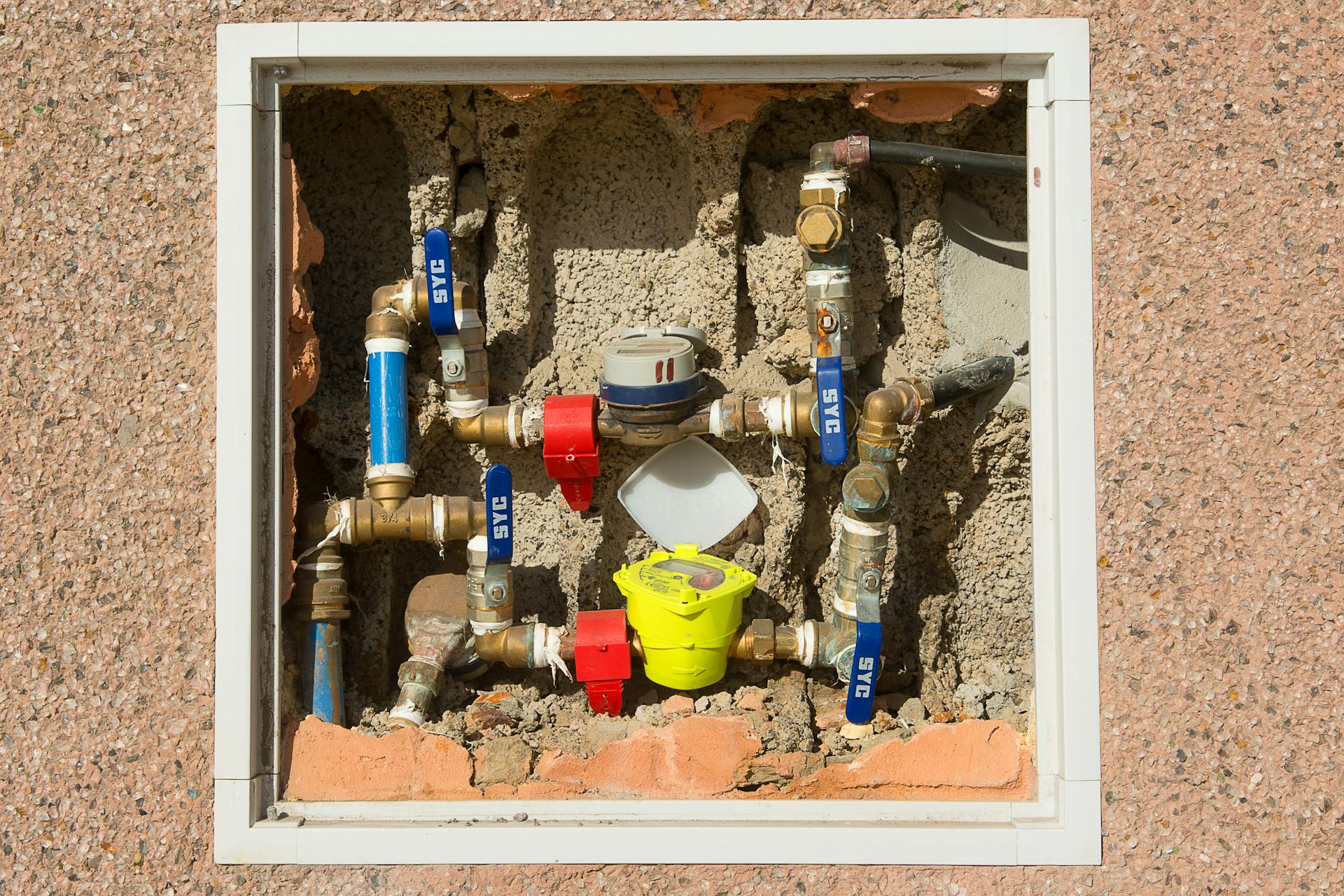
The water-meter test. This is the simplest hidden-leak detector ever invented and it costs you nothing.
- Turn off every fixture in the house. No running washer, no dishwasher, no toilet refilling, no ice maker cycling.
- Find your water meter (usually in a box at the curb, sometimes in the garage or basement).
- Note the dial position or the digital reading.
- Wait ten minutes without using any water.
- Check the meter again.
If it moved, you have a leak. If the small flow indicator (the little triangle or star on most meters) is spinning at any speed, water is moving through the meter even though every fixture is off — and that means it’s escaping somewhere inside or under your house.
What I do from there. Pinpointing a leak without tearing your finishes apart is the part of this job that takes experience. I work the most-likely path first — recent repairs, fixture connections, the supply lines closest to the wettest spot — and only open drywall when I have a strong reason to. The goal is to find the leak with the smallest possible repair footprint.
If your meter test came up moving, don’t wait. Every day a hidden leak runs is structural damage compounding. Call me and I’ll come find it.
— Greg
Leave a Reply